Across the Desert in the Dark
The pain woke me at one a.m. and I knew immediately there was no way I was going back to sleep.
I'd been trying to keep track of how much Tylenol and Advil I'd been taking—writing it down—but I'd given up. I didn't want to know how far beyond the 24-hour limit I was. All I knew was I needed more.
Technically, it was a new day. So I turned on the light and grabbed both bottles.
I was in Flagstaff, at my parents' house, a stopover on the way home from seven days of skiing in Telluride. The pain began three days earlier—a modest ache in my lower front teeth that vanished after a few Advil.
But things escalated quickly. Now it was the middle of the night, early Monday morning, and I had a choice to make. I figured I could sit for eight hours in an out-of-state ER waiting room or about the same in my car.
I chose the car.
Driving through the night wasn't a problem. The pain kept me awake. Every two hours, when I began fidgeting and the pain grew white-hot, I took more Tylenol and Advil.
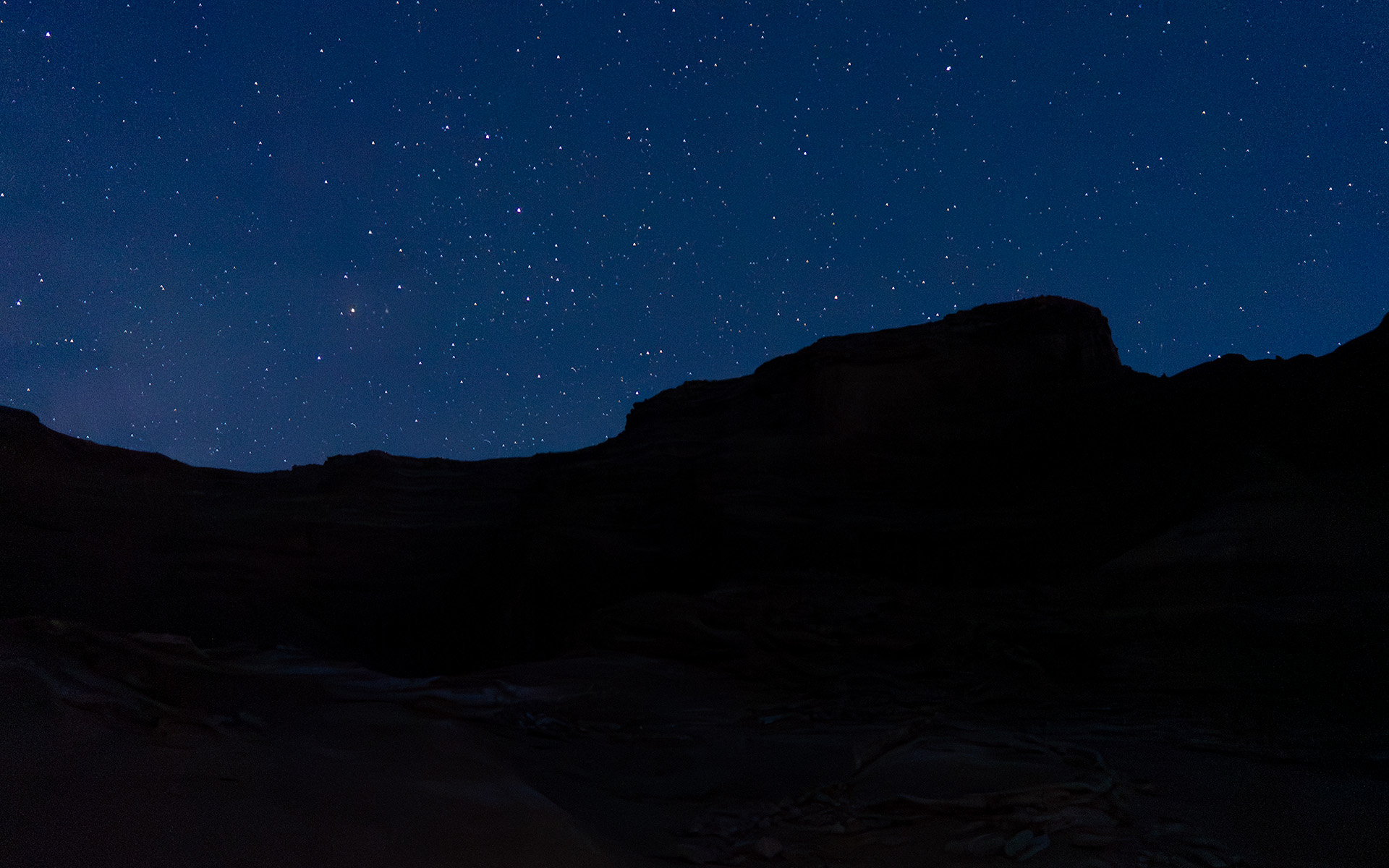
It felt unreal. Surreal, watching the freeway unfold in my headlights, hour after hour. Visions of 2020 danced in my head. A nightmarish time, old ghosts racing through the darkness beside me.
But the blackness also reminded me of skinning in the dark. That sensation of being enclosed. The headlamp's cone a pocket of light in a sea of darkness; no sound but your own breathing and the waiting, waiting for the sun to come and heal the land.
Mile after mile after mile.
At the California border I felt something new: a hard painful lump on my chin, a strange hotness spreading into my chest and throat.
Infection.
I'd been convinced the pain was my fault—that I'd been clenching my teeth somehow or scraping them too vigorously. That I'd damaged them. But no: what I had instead was a death sentence.
For most of human history.
I thought of all those countless people before me who'd felt exactly what I felt. The initial something's-a-bit-off. Then the ache. The white-hot. The swelling. Temporarily, there in the darkness, we occupied the same space.
In a few short hours, our trajectories would diverge dramatically. Mine would lead to 30 unpleasant minutes in an endondontist's chair, plus a short run of antibiotics. Theirs—some of them my ancestors—to an early grave.
In Flagstaff, my mom walked into the living room as I was moving skis to my car. For a moment I was a teenager again. She'd caught me—one last time—sneaking out of the house in the middle of the night.
But no: she was just lost; looking for the bathroom.
"Did I wake you?" she asked, worried she'd disturbed me.
I assured her she hadn't.
I took her hand, startled, as always, by how bent and tiny she was. As I led her to the bathroom I caught my dad's eyes. He was awake, watching us. He looked exhausted, haunted. I understood completely.
Back in the car, staring at the flowing ribbon of I-40's pavement, I thought of that moment, of my mother, the bony feel of her hand. I thought of my wife, full and vibrant.
It struck me, out there in the darkness, that my life was perfect exactly as it was. Even the white-hot couldn't hide my gratitude. Someday, I'd be a witness, like my dad, or a traveler, like my mom, on that final journey to shadow.
But not today.
— March 24, 2026
Andy Lewicky is the author and creator of SierraDescents
Matt Aronson March 25, 2026 at 6:43 am
What a wonderful expression of gratitude, esp. at the end of this beautifully written ode. Nicely done!
Bradley Brown April 25, 2026 at 5:59 pm
Tears, Andy-no words.