April 1, 2011

Thoughts On That Helmet Article…

Thoughts On That Helmet Article...

An article in Ski Canada Magazine examining helmet use stats in the US is generating quite a bit of buzz right now in the ski world. I’ve read the article and given it some thought, and my impression is that it’s easy to misread and/or misinterpret the article’s conclusions.

Let’s take a closer look at what the authors wrote: (more…)

Posted in Science, Skiing | 5 Comments

November 3, 2010

BPA Receipts

Here’s another way that most ubiquitous of not-so-friendly chemicals, BPA, can end up in your body: via store receipts. Turns out that the thermal papers used to print most receipts are heavily infused with the chemical (up to 2% by weight, apparently). Tests have revealed that the BPA easily rubs off on your fingers as you handle the receipts.

As always, the perennial question is should you be worried? Maybe. Handle one receipt or so a day, and your exposure level will be well within the daily tolerance level established by (I believe) the FDA. However, people with wet fingers can pick up up to ten times as much BPA off the receipts. And, the presence of other chemicals on your hands commonly found in hand lotions (specifically, alcohol), can act as a carrier, drawing BPA through your skin and into your bloodstream much more efficiently.

The worst case scenario would look something like a pregnant cashier with lotion on her hands handling hundreds of receipts per day. Such a situation could potentially lead to harmful exposure levels, especially (obviously) to the fetus. Alternative papers are apparently in the works, so watch for a “BPA Free” tag on receipts in the future. Of course, there’s no guarantee that these newer formulations will prove to be any safer. Via Science News.

Posted in Health, Science | 0 Comments

November 13, 2009

Execution by Mathmatics

I enjoyed the original Freakonomics when it first came out. Written by University of Chicago economist Steven Levitt and New York Times journalist Stephen J. Dubner, the book used economic analysis in clever and unexpected ways to expose “the hidden side of everything.” Freakonomics made its share of enemies, thanks to its occasionally radical theories, such as suggesting the national decline in Crime seen during the Clinton years was actually due to the legalization of Abortion some twenty years earlier. Levitt and Dubner clearly enjoyed rabble-rousing as a sport. But, the book did successfully challenge conventional wisdom on a wide range of subjects. It was a good, fun read.

After reading the book I followed the Freakonomics Blog for a while, though as time progressed the authors’ unconventional wisdom began to look more and more like conventional right-wing claptrap, so I moved on. Flash forward to this year, and the release of Levitt and Dubner’s new book. SuperFreakonomics has a key chapter on Climate Change titled, “Global Cooling: What Do Al Gore and Mount Pinatubo Have in Common?”, which gives you a good sense of where their unconventional wisdom has apparently led them (more…)

Posted in Books, Science, Weather | 0 Comments

November 9, 2009

BPA in the NY Times

NY Times columnist Nicholas Kristoff writes about the ubiquity of BPA in our bodies, plus a gaggle of new studies linking BPA exposure to a variety of abnormalities in test animals. If you’ve been following the BPA Saga (including this impressive bit of corporate nastiness by Sigg), you’ll see that the latest research keeps upping the ante on the potential ill effects of BPA exposure in our food and water.

It always seems to me that the American Way of doing business really fails when it comes to protecting people from unknowns like chemical toxicity in products. The presumption in our system is that something is innocent (ie safe) until proven otherwise, and “proof” of either the legal or scientific variety is stunningly difficult to come by when you factor in the nature of statistical Randomness—not to mention the far-too-cozy relationship between industry and regulators, or the fact that the only organizations with enough money to fund large studies on these chemicals are the very companies who sell them.

I’ve always thought the big issue with chemical exposure is not the impact of any one chemical, but rather the rich brew Americans are exposed to only a daily basis as we use our computers, fire-safe rugs, clothing, and furniture, and all the other products of the modern age. What interactions and multiplying effects arise directly as a consequence are anyone’s guess—and virtually impossible to establish via any sort of replicable study.

My guess is future generations will be baffled by our cavalier attitude toward chemical exposures. And they’ll probably have the data, at long last, to show just exactly what the impact of something like BPA actually is. Wouldn’t it be nice, though, if we didn’t have to wait a hundred years or more before our various industries switched to safer alternatives?

Posted in Health, Science | 6 Comments

September 16, 2008

BPA Study links exposure, health effects

To the best of my knowledge, this is the first time a study has linked BPA exposure to health issues in humans. Here you Go…

Posted in Health, Science | 0 Comments

September 5, 2008

God, I Love the Smell of HDPE in the Morning…

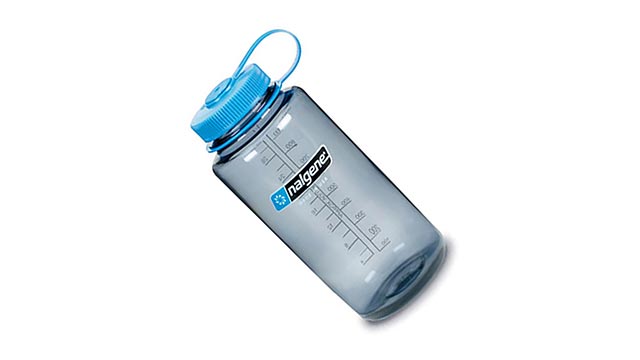
Nalgene HDPE Water Bottle

Among the more esoteric search topics that bring visitors to SierraDescents is the question of the scent of HDPE water bottles.

Do HDPE water bottles really smell bad, people wonder? Or was that just a marketing pitch started by the creators of Lexan?

Here at the world-renowned SierraDescents Institute for Plastic Odor Research (SIPOR), I decided to create an elaborate experiment to answer that question once and for all (more…)

Posted in Gear, Health, Science | 2 Comments

August 7, 2008

Dept. of Propaganda: BPA Facts.org

The Evil BPA Bottle: Nalgene 1-liter Lexan

Perhaps by now you’ve heard the radio spot on KFI AM 640:

A concerned female voice warns consumers: ‘Soon, many common everyday products could disappear from grocery store shelves all across California’.

What’s the threat, you ask?

Those dastardly Sacramento Politicians are trying to ban BPA—a chemical that has been safely used for 50 years (the ad assures) in plastic products like reusable water and baby bottles (more…)

Posted in Health, Science | 0 Comments

May 27, 2008

Earn More: Fix Your Teeth!

The Freakonomics Blog at NYT has an interesting write-up of what they call Beauty Premiums: the benefits enjoyed by being attractive. One of the most objective ways to measure beauty’s benefit is to simply look at wages, and this is what the Freakos do, in a series of provocative if not outright-disturbing studies.

Tall people turn out to be big beneficiaries, with the interesting stipulation that your height advantage has to begin in adolescence, because lifetime self esteem is heavily developed during this time. If you’re a tall kid, you get a self esteem boost, which translates directly into a wage boost (according to the study).

Another clever study looked at the impact of fluoridated water on future wages (if you’re not aware, fluoridation has a huge impact on teeth, especially for poor people who otherwise can’t afford good dental care). The results of areas which switched to fluoridated water? A wages boost in the next crop of kids.

So if you’re not beautiful, get your teeth fixed. At least you’ll make more money. Then, your self esteem will improve. Which is as good as being beautiful, and even if it’s not, you’ll have enough money to upgrade your appearance, so there you go.

All this talk of beauty and wages can be discouraging, but according to Freakonomics there is at least one bit of good news: people with unusual or ridiculous names do not suffer a wage penalty (so X-Man McGillicuty has nothing to worry about, apparently).

Here at SierraDescents, I’ve adopted a slightly different strategy: I prefer to simply assume I’m extremely attractive, rather than putting any work into actually being attractive (like wearing expensive clothes, getting cosmetic surgery, showering, combing my hair, etc). I’ve been quite happy with the results—though it is best not to examine yourself in the mirror too closely. :)

Posted in Science | 0 Comments

May 8, 2008

Female Athletes and ACL Tears

The New York Times is running an article on the epidemic of ACL tears and other injuries in U.S. female athletes.

Female participation in sports in this country is exploding, credited in part to a 1972 law, TITLE X, which mandated equal opportunity in sports to female athletes.

As more and more girls and young women compete in sports, it would be natural to expect to see more female sports injuries. But, as the article points out, female athletes may be uniquely vulnerable to sports injuries. As they hit puberty, physical changes, including the structural design of the body and hormonal differences, take place in women’s bodies (more…)

Posted in Health, Science | 0 Comments

April 21, 2008

Nalgene Phases out BPA Bottles

Nalgene has just announced the phase-out of BPA-containing bottles from its product lineup, including all polycarbonate (Lexan) water bottles.

Any way you put it, this is a stunning reversal from a company that has been an unwaivering advocate for the safety of Lexan/Polycarbonate. For interesting commentary on the subject, see Z Recommends’ article, Hell Just Froze Over.

I’d been working (luckily not too hard) on a prepared statement on water bottles and BPA, which was going to wind up concluding that the safety risks of Lexan bottles are unknown but worrisome, and that better (in terms of functionality) alternatives are available. That argument now seems moot. With Nalgene exiting the BPA market, so to speak, that basically means the industry as a whole will be phasing out production as well.

Along with the announcement, Nalgene has created a new website, Nalgene Choice, featuring information on its replacement products, which will reportedly replicate the clear plastic look and feel of Lexan without the dubious BPA and phthalates.

Before we celebrate too enthusiastically, it’s worth remembering that plastic is not inert where human chemistry is concerned. Even the safest plastics, like HDPE, still contain chemicals of potential worry. Nalgene’s replacement bottle may well be free of BPA but contain some new concern as yet off everyone’s radar.

It is a sad reality that consumer protection in the United States is exceedingly weak right now. Companies are not required to prove their products safe before they hit the market. Our government agencies are particularly ineffective when it comes to issues like BPA, which (IMHO) clearly pose a threat in some circumstances (ie, old damaged bottles, baby bottles), but which also enjoy considerable market support and ambiguous research results.

We’ll be watching closely for information on the new plastic used in the new Nalgene lineup (Tritan Copolyester). This story, I’m sure, will continue.

Posted in Gear, Science | 0 Comments

Previous Posts »