Archive for April, 2008

Birch Mountain Marathon

Sunday, April 27th, 2008
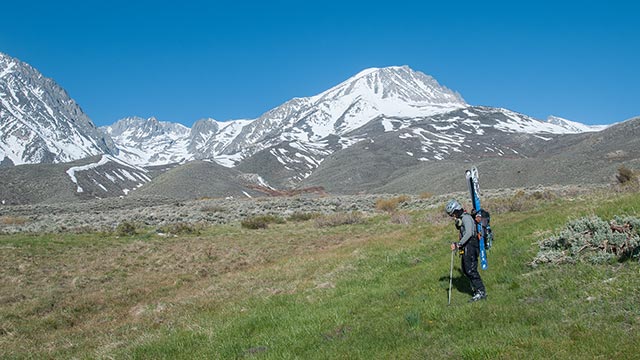
Birch Mountain Approach

Birch Mountain

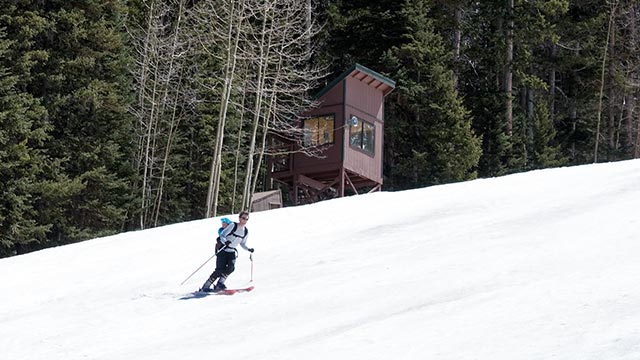
Saturday I skied Birch Mountain with a group of skiers from the Angeles Sierra Club’s ski mountaineer’s section.

I don’t get the opportunity to ski in groups that often, thanks to my schedule and reclusive personality, but I do enjoy it, and it makes for fantastic photo ops.

The dynamic is also completely different when traveling with others as opposed to going solo. I naturally try to go with the flow when I’m with others, which can lead to interesting dilemmas.

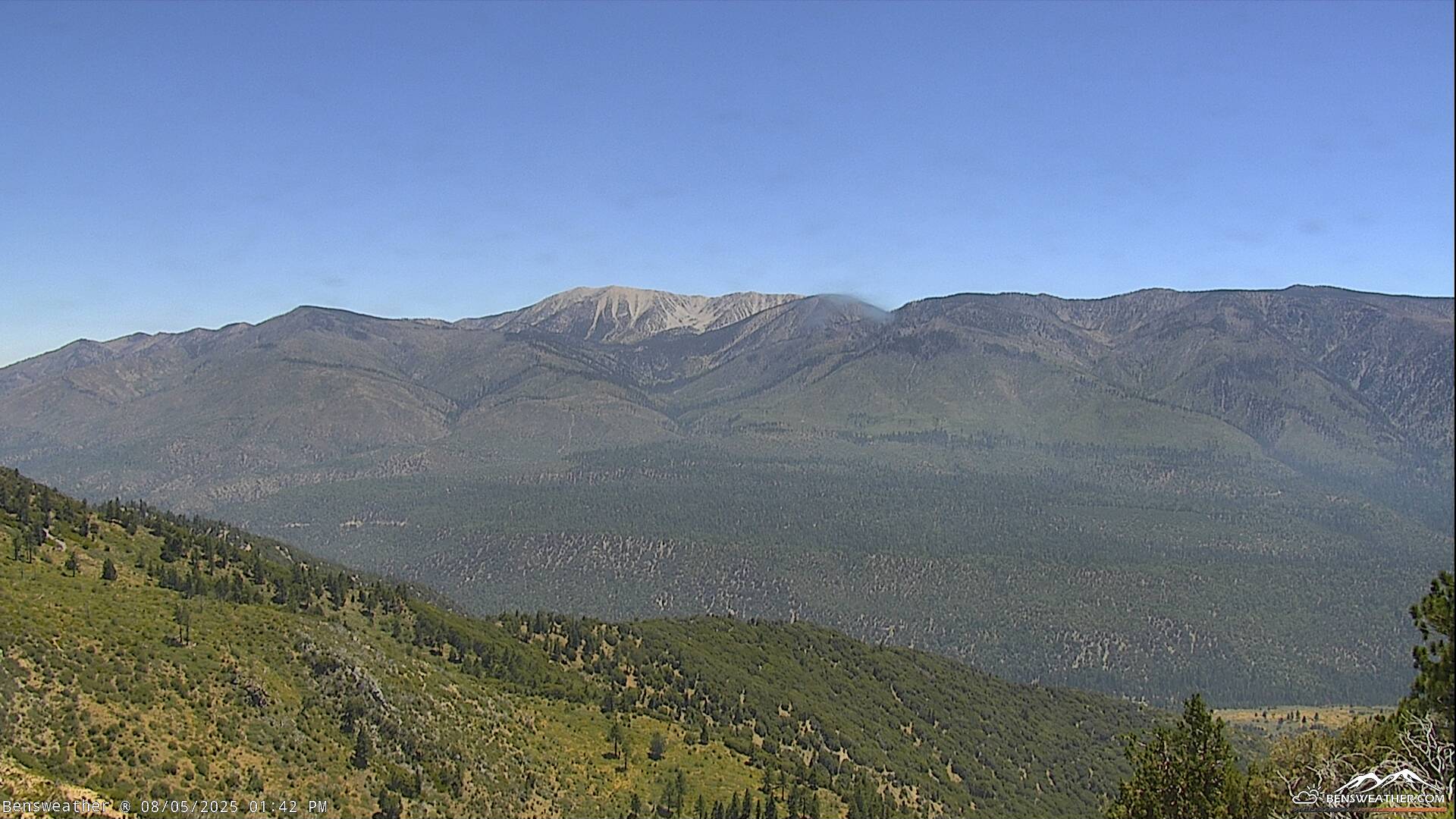
Birch Mountain is one of the Sierra’s true giants. It stands 13,665′ feet high, and the approach begins around 6300′, for a whopping 7300+ vertical feet of climbing. Nonetheless, the approach is one of the easiest you’ll find from Big Pine south, with essentially no bushwhacking and no route finding necessary.

Our group planned a 6 a.m. meet time, which was obviously late to begin with for a day trip to the summit. Some disagreement about which road to take tacked on an extra hour, so we didn’t get started until after 7 a.m.

This time of year, my primary concern (really, my only concern) is wet slides. Since we were ascending and skiing Birch’s southeast slopes on a warm, relatively windless day, I was worried that our late start would put us on the mountain when things got dangerously mushy.

As it turns out, that concern was unfounded.

Instead, the big issue was texture: the snow’s surface was positively wrecked by two dry, windy months. Call it what you will–sun cups, shark fins, penitentes—we saw all of it in abundance. Really the only possibility of skiing the mess was waiting for things to warm up and soften as much as possible, so the late start began to seem like a good idea. And all that texture kept the snowpack as a whole from turning mushy, thanks to evaporative cooling (extra surface area), so stability remained nice and solid, even on aspects that were directly sun-exposed.

Climbing up 7000 vertical feet of sun cups, however, was just absolutely brutal. I didn’t make the summit until 3 p.m. Solo, I would never summit that late, but in a group, I was just kind of going with it. I waited up top about an hour for my ski partner to arrive. When I looked over the edge at Birch’s southeast slopes, I was positively horrified to see a long arm of shadow reaching down the mountain. The sun was setting on the east face! Those sun cups were freezing solid right before my eyes.

To say we were totally hosed at that point would be a massive understatement. We faced 7000 vertical feet of survival skiing on steep, icy slopes that were heavily sun cupped to the point of being unskiable. I can say without any hesitation that it was the worst skiing I’ve ever faced in my entire life. By the end of the ordeal (it took nearly five hours to get down) it was actually a relief to take off the skis and downclimb the rest of the way to the car. I’m actually kind of amazed my legs didn’t just fall off.

The shame of it is that Birch Mountain is absolutely spectacular. This is one of the classic big descents in the range. With good or even marginal conditions, it would have been fantastic. I’ll have to do it again next year! Oh well.

Full Report: Birch Mountain Marathon

Update: Quantum Love Affair Continues

Tuesday, April 22nd, 2008

black diamond quantum

Just made a few quick edits to my Black Diamond Quantum review page.

I’ve now had the pleasure of using both 45 and 55-liter versions of the Quantum.

I like the extra volume of the 55, because it makes it easier to sneak your ski boots into the pack for those oh-so-brutal dry Eastern Sierra approaches.

So, no surprises here: I continue to love the Quantum. Of all the packs I’ve tried in the light-enough-to-ski-in but big-enough-to-carry-multiday-gear category, the Quantum really rises above the competition. I’m not willing to declare my quest for the perfect backpack over, but I’m certainly happy enough to give the Quantum my unqualified recommendation as a ski mountaineering pack suitable for overnights.

Williamson: Notes from the Field

Monday, April 21st, 2008

Today’s Notes from the Field come courtesy of my friend Bill, whose adventures on Mount Williamson served as an early inspiration to me on my own quest to ski California’s second-highest peak.

Bill has a thing for the George Creek approach, which appears here and there in the guidebooks, usually with a sly ‘recommendation’ ala …for an extra-special adventure, don’t miss this unforgettable Sierra bushwhacking classic…

My own fascination with Williamson probably began the moment I first saw the beast.

But how could you not become obsessed with this massive, merciless mountain?

Williamson shrugged off my first attempt to ski it with an effortless indifference that was quite different from the usual, friendly Sierra ‘hello’ I’d grown accustomed to.

Not long after that failed effort, still licking my wounds, I chanced upon a TGR report of Bill’s first George Creek attempt.

It was comforting, reading about the carnage, to hear that there were people at least as crazy as I was floating around the Eastern Sierra. It was also comforting to learn that others had tried to ski Williamson and (like me) barely managed to reach the snowline before being swatted away like a bug.

Most importantly, tips and clues from Bill’s trip proved instrumental in leading to my eventual success skiing Williamson’s Bairs Creek Cirque.

With that preamble, allow me to relay a message from Bill regarding his latest attempt to ski Mount Williamson via George Creek:

I had a little experience this weekend I thought I’d share with you. I decided to head up to Trojan Peak and the South Side of Williamson via George Creek.

Trojan Peak looked perfect. The South face was a beautiful ramp of snow. I also knew that my line on Williamson was filled in from a photo I saw on Splitboard.com I also figured, that if anything, the North Face of Trojan holds three or four perfect couloirs for the taking.

Left home early Sunday morning – 5:30 AM.

This being my second time up George Creek I knew what to expect. Yeah – it’s as bad as you remember. But knowing where to go this time made it a bit easier. Also, this time I wore hiking boots with my ski-boots clamped into the bindings on my pack. A little extra weight, but it made walking easier. I figured just take it easy, no rushing. The first 2 miles would take about 3-4 hours…..so I was all mentally prepared. I felt strong; in good spirits, making good time.

What I didn’t expect was snagging the tails of my skis as I tried to cross the creek. I had taken my boots off so they wouldn’t get wet. As I stepped into the creek, my tails snagged the bank causing me to loose my balance and fall forward. Not wanting to land face first in the water with a 60lb pack on my back I tried to spin. I was almost successful. My whole body made it around except for my lower right leg and foot. The result was I got wet, killed the camera, and hurt something; most likely sprained ankle.

I sat for about an hour assessing things. I was wondering if I was going to have to use my SPOT Messenger for 911.

The pain wasn’t too bad. I figured I’d try to walk it off. About an hour later it was apparent that the reason why the pain wasn’t too bad was because my foot had been submerged long enough in the icy water to numb it. As the foot warmed up the pain increased.

I figured if the pain wasn’t that bad, it was a minor sprain and jamming it into my ski boot next morning would actually give it some bracing. But now, as I tried to friction walk up a slab, I got the message that this was probably not going to work. By now my ankle was getting weak, and my knee was starting to hurt. I figured I’d better look to see what the damage was. When I took my sock off, my toe was black and purple and swelling. My ankle was the size of a baseball. I tried to mimic a skiing motion. NOT good.

I decided it was best to let George creek win again. Four and half hours later of bushwhacking, I hobbled to the truck. I could barely walk by then. I pulled the bag out and slept in the bed of the truck for a couple of hours and then drove home.

I’m off to get x-rays now. I think my big toe is broken at the joint, my ankle is a high-lateral sprain at least, and my knee is just slightly sprained. The ankle is the size of grapefruit this morning. Oh, and of course I have the George Creek Brand – more scratches that I care to count on my arms and legs.

F*cking George Creek. I’ll be back next year

–Bill

Get well soon Bill!

ps — my wife recommends we switch to basketball or ‘just go out and get a beer now and then’

Nalgene Phases out BPA Bottles

Monday, April 21st, 2008

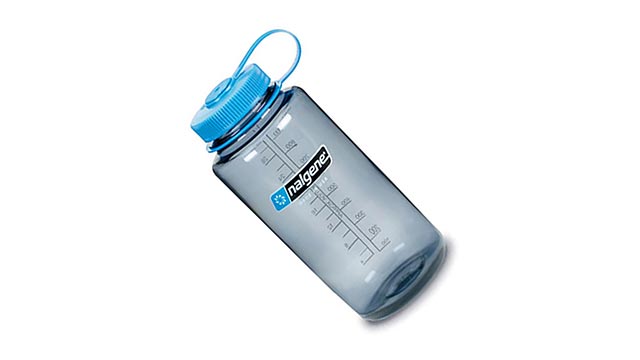
Nalgene has just announced the phase-out of BPA-containing bottles from its product lineup, including all polycarbonate (Lexan) water bottles.

Any way you put it, this is a stunning reversal from a company that has been an unwaivering advocate for the safety of Lexan/Polycarbonate. For interesting commentary on the subject, see Z Recommends’ article, Hell Just Froze Over.

I’d been working (luckily not too hard) on a prepared statement on water bottles and BPA, which was going to wind up concluding that the safety risks of Lexan bottles are unknown but worrisome, and that better (in terms of functionality) alternatives are available. That argument now seems moot. With Nalgene exiting the BPA market, so to speak, that basically means the industry as a whole will be phasing out production as well.

Along with the announcement, Nalgene has created a new website, Nalgene Choice, featuring information on its replacement products, which will reportedly replicate the clear plastic look and feel of Lexan without the dubious BPA and phthalates.

Before we celebrate too enthusiastically, it’s worth remembering that plastic is not inert where human chemistry is concerned. Even the safest plastics, like HDPE, still contain chemicals of potential worry. Nalgene’s replacement bottle may well be free of BPA but contain some new concern as yet off everyone’s radar.

It is a sad reality that consumer protection in the United States is exceedingly weak right now. Companies are not required to prove their products safe before they hit the market. Our government agencies are particularly ineffective when it comes to issues like BPA, which (IMHO) clearly pose a threat in some circumstances (ie, old damaged bottles, baby bottles), but which also enjoy considerable market support and ambiguous research results.

We’ll be watching closely for information on the new plastic used in the new Nalgene lineup (Tritan Copolyester). This story, I’m sure, will continue.

Tandem Skiing

Tuesday, April 15th, 2008

Arizona Snow Bowl

Flagstaff had a great ski season this year, though, like California, the traditionally-big March ended up high and dry.

Still, there’s enough snow to ski on the mountain right now, so what better way to warm up the legs than put a 25 pound bundle of joy on your back, skin up the local ski run, and ski down?

In case you’re wondering, I’m using an Ergo carrier, which I really like above all the others I’ve tried (ie, Baby Bjorn, Baby Backpacks, etc).

Looking toward the weekend, Abineau Canyon still has plenty of snow on it. This descent goes right from the top of the San Francisco Peaks, elevation 12,600′, off three giant fingers of avalanche gullies. One of them went big in the El Nino winter of 2005, I believe, and I’ve got photos to prove that giant avalanches do indeed occur in Arizona.

Anyhow, there’s little to no such danger now, just lots of good Southwestern consolidated corn. I actually skied Abineau last year, if walking from patch to patch of snow can be called skiing. The San Francisco Peaks were hit hard by the drought last year, making for a pitiful ski year. No such trouble in ’08, though. If I can get the logistics worked out, this would be a nice feature to write about–Arizona’s premiere backcountry skiing descent. We’ll see.

The Great Wheel Turns

Monday, April 14th, 2008

I’m in Arizona right now, going through old family photos and contemplating the meaning of life. Saturday I attended my grandmother’s funeral in Phoenix. Thoughts of that upcoming occasion undoubtedly contributed to my feelings of impending doom while hiking and skiing Lone Pine Peak (not that the route needed any assistance in that regard).

We drove out Friday from L.A. to Phoenix, taking the 60. A black car appeared behind us, going extremely fast. They tailgated me for a short while, allowing me to look at the drivers’ and passengers’ faces–they all looked like kids. And then the car shot past us on the right, and accelerated away at a rate uncommon even for L.A. drivers (more…)

Lone Pine Peak – East Couloir

Thursday, April 10th, 2008

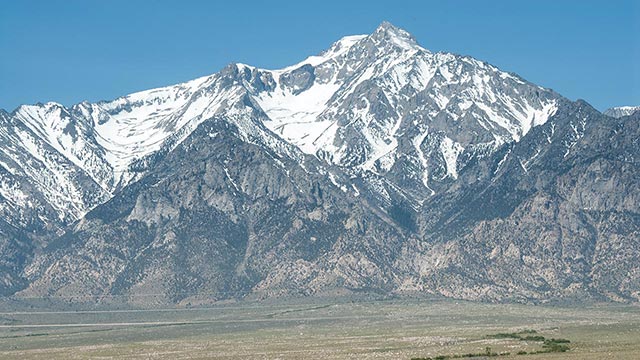
Lone Pine Peak

Sometimes as a writer you just don’t know how much information to give.

It would be easy to present this as a dashing adventure in which I fearlessly charged into the unknown and triumphed, except that’s not at all what it was like.

This was an intense struggle that really made me question myself and what I was trying to do.

I had noticed a tiny sliver of snow near Lone Pine Peak’s summit several years ago. It looked interesting. It also looked like it fed right into the middle of the peak’s massive northeast headwall, a 1000′ high cliff with no way out.

How I ever came to think it would be possible to ski this line, I can’t say. Occasionally, I guess my imagination runs amuk. I am glad to be able to return and tell the tale here. It was a powerful experience. For the record, I don’t know if this has ever been done before. It’s just such a big, elegant, aesthetic line it’s hard to believe it could have escaped so many good skiers’ attention for so long (though, as I note, it is indeed ‘hidden in plain view’). But I’ve never heard a word of it, so I just don’t know.

Lone Pine Peak: Summit to Desert

» Back to Home

SierraDescents Features