Archive for February, 2009

Gold Hill No. 9

Friday, February 27th, 2009
Telluride - Backcountry Access Gate

Backcountry Access

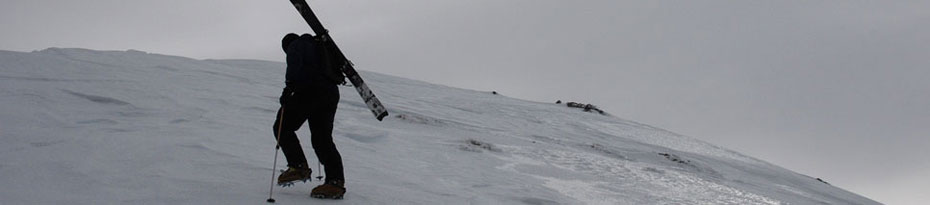
Hiking the Ridge

Hiking the Ridge

San Joaquin Couloir

San Joaquin Couloir

Gold Hill 9 Access Gate

Gold 9′s Access Gate

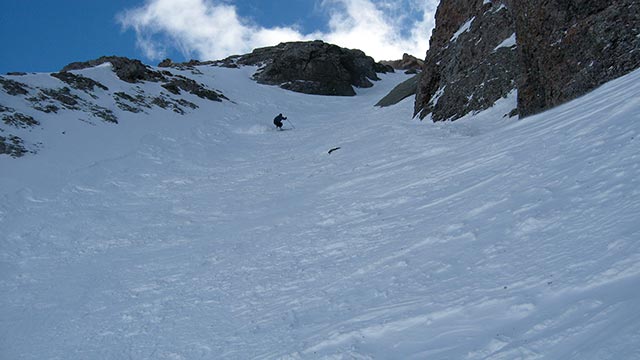
Looking Down

Looking Down the Chute

Skiing the Upper Chute

Skiing the Upper Chute

The Apron

Lower

Telluride - Gold Hill 10

Gold 10 & Patrol

Telluride - Gold Hill Chutes

Gold Hill Chutes 6-10

9:44 am atop Telluride, elevation 12,570′. A cold wind blasts across the ridge as my brother and I hop off the Revelation Lift and check the signs near the patrol hut.

Telluride’s Gold Hill Chutes are open.

It’s our last day here this year, and this will be a fine way to cap off the visit—hiking the latest addition to Telluride’s seemingly ever-growing offering of stunning hike-to terrain.

Our target today is Gold 9, the second farthest of the chutes. The scouting report on Gold Hill Chute No. 9 suggests that this is the safest and least technical line, at least given current coverage.

The hike to the Gold Hill Chutes takes us immediately out of bounds, though the resort’s backcountry access gate. This is perhaps a good reminder that we’re entering wild country here. Though the chutes themselves may be controlled terrain, the hike is anything but trivial.

In fact, with the wind constantly rocking us, the hike atop the often-steep and exposed ridgeline will be by far the scariest part of the day.

The views, as usual, are stunning. San Joaquin bowl is to our left, as well as the uber-aesthetic San Joaquin Couloir.

A last bit of steep, rocky ridge climbing gets us to Gold 9′s entrance. Access points to the Gold Hill Chutes are tightly controlled. Entry is through gates only—to help prevent the hapless from dropping into cliff-bound lines.

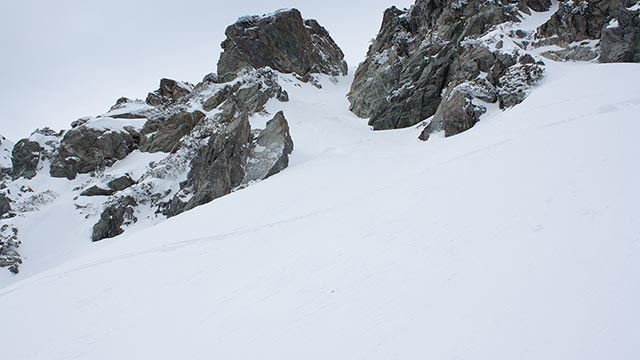
I take a peek down the chute and am pleased to see first of all that we are where we though we were (always good) and that Gold 9 does indeed look (to me!) like a modest descent: 40-45 degrees on hard windslab, with only a few rock gardens below to add a bit of drama.

The fact of the matter is that this kind of skiing is what I do. But how can I convey how unusual it is to be accessing terrain like this as part of a major U.S. ski resort’s controlled in-bounds terrain?

It makes me want to kiss the nearest ski patroller.

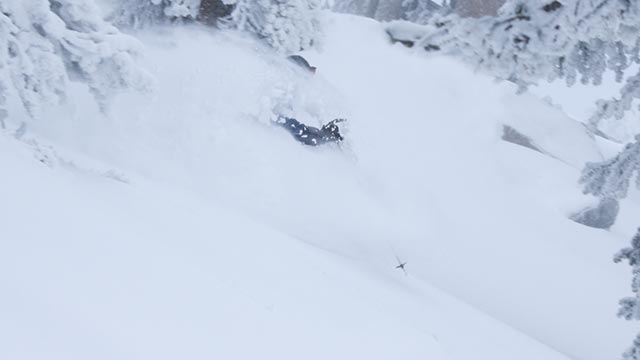
I bang out a few happy turns, being careful to keep things well under control. My brother follows, looking perhaps a tad more wide-eyed as he drops into the chute.

On hard snow this is somewhat committing skiing, but it’s easy to imagine dropping in to smooth tasty powder. Telluride’s ski patrol are doing an amazing job of opening up these lines, along with nearby Palmyra Peak, even when the snow is fresh.

Lower in the chute the angle stays interesting. I stop to take a look at our neighbor, Chute No. 10. A ski patrol is currently doing the delicate dance of making his way through the narrows.

Gold 10 definitely looks like a more ambitious line.

We’ll have to give it a try next time.

A few more turns get us into the rolling terrain of Black Iron Bowl. Here, the snow is not so friendly: breakable crust alternating with windboard, with flat light to boot.

We pass through easily enough, and just like that we’re back into Telluride proper, skiing perfect corduroy groomers back to the Gold Hill Lift. This abrupt transition of in and out-of-bounds terrain can take some getting used to—but it surely puts a smile on my face. We’ve just skied the kind of terrain that ordinarily takes hours to access. And now we’re back in time for lunch.

Revelations

Sunday, February 22nd, 2009
Telluride - Revelation Bowl

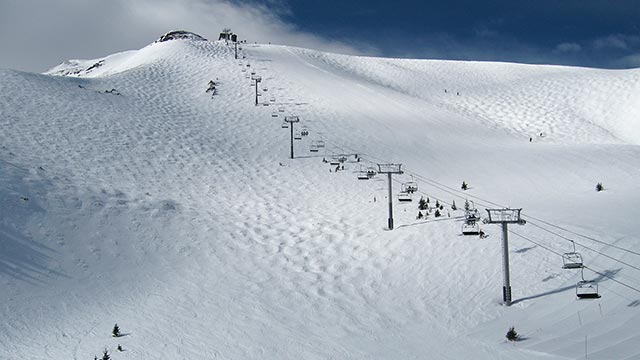
Revelation Bowl

Telluride - Revelation Bowl

Telluride

Telluride - Revelation Bowl

GS Boards Today

Telluride - Revelation Bowl

Chair 9

It feels like Europe says my brother. We are traversing into Telluride’s newest terrain addition: Revelation Bowl. And yes, I think to myself, that’s exactly what this is like.

With its striking, high altitude bowl, steep, wind-hardened snow, and views of technical terrain in every direction, Revelation Bowl could easily be mistaken for the French Alps. There’s even a euro-style view deck by the base of the chairlift from which to sip beverages and marvel at the surrounding San Juans.

The Revelation chair hardly adds huge swaths of terrain to Telluride’s already-impressive official sweep. Instead, this addition is more of a tweaking of the Telluride experience—or perhaps a continuation of the inevitable evolution toward high-altitude open bowl skiing.

With lift-served skiing now reaching 12,570 feet, Revelation Bowl sits well above tree line, offering groomed and wild terrain that feels exposed enough to put the butterflies back in your in-bounds ski experience.

A few runs of this, and my brother and I zip back to chair 9′s steeps, which suddenly feel a whole lot flatter. Yep: just like Europe.

It’s Day One of our yearly week in Telluride, and already the mountain has offered up a memorable start. Adding to the attractions: the Gold Chutes are open for hike-to skiing. These steep-skiing lines were officially closed to the public last year—at least while we were visiting.

And of course, there’s always a date with Palmyra Peak on the agenda. This year I’ve got my full backcountry kit to make the Up a little easier, plus two beacons, just in case my brother decides to join me. As for true backcountry endeavors, I think I’m going to do my best to behave. Solo ventures in unfamiliar waters really aren’t smart. Maybe if it was March—though I’d sure love to drop down into Bear Creek Canyon. Maybe peek into San Joaquin Peak’s north couloir as well…

San Francisco Peaks – Abineau Canyon

Saturday, February 21st, 2009

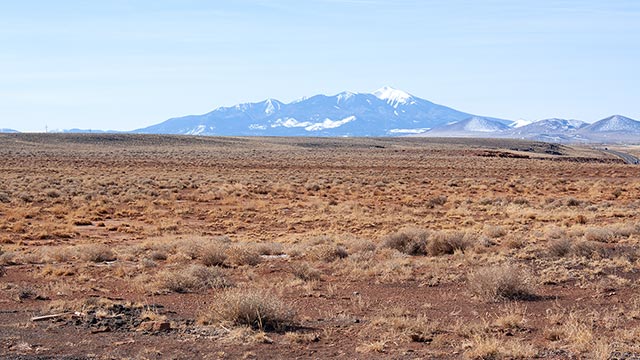
Abineau Canyon

If there’s a prettier mountain in the world, I don’t want to know about it. Here’s my hometown mountain, the San Francisco Peaks (Arizona’s high point), as seen from the north.

The prominent snowfield off the main summit, with its three fingers, is Abineau Canyon—certainly one of the biggest, most aesthetic backcountry ski descents in Arizona.

I’m not sure if Abineau is the most active avalanche path on the mountain, but it is easily the most spectacular, capable of throwing down massive slides. Such nightmarish possibilities have always kept me away during midwinter months, though this remains high on my list of must-do descents (I’m not counting a low-snow tour I did down the summit ridge in late April).

Snow Camping – More on Pads

Thursday, February 19th, 2009

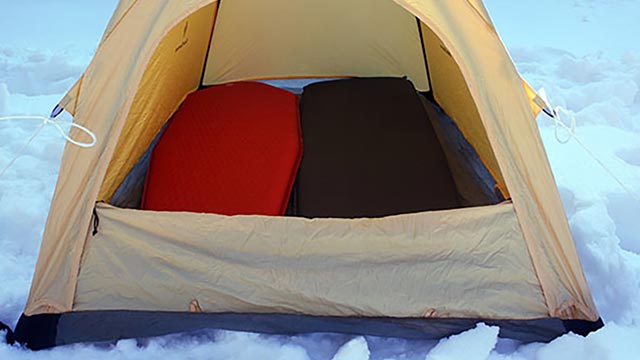
Snow Camping Techniques

We’re here in Flagstaff, AZ, en route to Colorado for our annual family ski vacation, and I’ve got my tent set up in my parents’ yard.

No—it’s not that my folks are driving me crazy. With overnight lows an invigorating 8° and two to three feet of snow all around, I thought now would be an excellent time to set up a snow camp and run a few tests. (more…)

Level I Avalanche Course in SoCal

Tuesday, February 17th, 2009

Avalanche professional Jeff Pierce will be teaching a Level I avalanche course in the Southern California region next week, with classroom work scheduled for 7-10 p.m. February 24 and 26, and in-the-field work on Feb 28 and March 1 at Mount Waterman. Price including lift ticket is only $200. According to Jeff, the course will be a modified Level I with more emphasis on snow pit study and stability tests.

Jeff has been teaching Level I and II avalanche courses for 11 years, and he has over 23 years experience in the field, including consulting for local resorts and government agencies as well as doing control at Mount Waterman and June Mountain ski areas. If you’re in town, don’t miss this chance to learn more about our local snowpack with an established professional. This would also be an excellent opportunity to meet like-minded backcountry partners in our area.

For more info and to sign up, contact Jeff at pierce_group@msn.com or 626-335-1923.

Baldy Bowl – Hourglass Chute

Sunday, February 15th, 2009

Maybe Yes Maybe No was kind of the theme today. I was looking for an excuse to stay home, but with our ever-changing forecasts pushing the expected storm one more day yet again, I figured Mount San Antonio’s Baldy Bowl had had time to stabilize, so why not go tromp around in the snow and look around? (more…)

San Jacinto Peak: East Face

Monday, February 9th, 2009

Skiing San Jacinto Peak's East Face

Can this possibly be Southern California backcountry skiing?

YES!!!

Full Report: Skiing San Jacinto Peak’s East Face.

Snow!

Saturday, February 7th, 2009

It feels like the SoCal ski season just got a last-minute governor’s reprieve. As of Saturday morning, this series of storms has left a reported 36″ of new snow at Mt. Baldy Ski resort, 18-24″ at Mountain High, and 10″ in the Southern Sierra. Be aware that much of this snow fell on bare ground or bare ice, and a lot fell in a short span of time, making backcountry travel potentially hazardous this weekend until the snowpack has had time to settle. If you can’t abide resort skiing, choose conservative low-angle terrain and assess conditions constantly.

This snow is going to be with us for a while now, so there’s no rush. Be safe!

Mingori-Greenberg: “Backcountry Skiing”
Wednesday, February 4th, 2009

Backcountry Skiing California's Eastern Sierra

Mammoth Lakes climber/photographer Dan Mingori and Eastern Sierra Avalanche Center co-founder Nate Greenberg have released a new backcountry skiing guidebook, Backcountry Skiing California’s Eastern Sierra.

Backcountry Skiing limits its coverage to the Mammoth and surrounding regions, but oh what coverage it is! The book joins Paul Richins Jr.’s 50 Classic Backcountry Ski Summits and John Moynier’s Backcountry Skiing in the High Sierra as one of three essential guidebooks for the Sierra ski mountaineer. Don’t miss it.

Snow, Part II: Jepson Peak

Monday, February 2nd, 2009

Jepson Peak

Well, while I’ve been wallowing in despair over the lack of snow in the local mountains, some of you have apparently been going out and skiing, which is admittedly overall a better way to spend your time.

SoCal skier Brad H. was kind enough to send in a photo of Jepson Peak, in the San Bernardino Mountains, from this past weekend. Where did all that snow come from? Last I heard, Jepson was just a big ice playground. According to Brad things became bulletproof in the couloir as soon as the sun went behind the ridge, but the coverage was good, and the snow softened nicely in the flats.

Most importantly: it’s snow! I sometimes forget that there’s another range past the San Gabriels. And the San Bernardino Mountains are about 1500′ higher as well, which means a rain event in the Gabriels can easily produce snow above 10,000′ in the San Bernardinos. So, it’s out there, if you know where to find it…but I’m still keeping my fingers crossed for more storms.

» Back to Home

SierraDescents Features